

"TikTok told me to go all in"
Financial advice on social media, or 'finfluencer' content, has exploded in recent years, but what is the impact on the next generation of traders? Here's what the data says.
* Trading is risky. Your capital is at risk.
FXTM audited 72 finance TikTok videos, from sound budgeting advice to dangerous CFD scalping strategies, to reveal what Gen Z traders are really watching, trusting, and acting on. The findings are more nuanced, and more alarming, than a single percentage suggests.
Key takeaways
72 TikTok finance videos audited
1 in 4 videos raised accuracy concerns
74% of Gen Z trust finfluencers over regulators
80% of retail CFD traders lose money (FCA)
From "buy EUR when the sun is shining" to Fibonacci spirals before breakfast
A new FXTM analysis reviewed 72 finance TikTok videos to determine which trends are gaining traction among Gen Z traders, and how many are dangerously misleading. The audit covered search tags such as #FinanceTok, #TradingTips, #ForexTips, #CFDTrading and #SideHustle, rating each video by advice type, risk level and factual accuracy.
72
Videos audited across 5 hashtags
75%
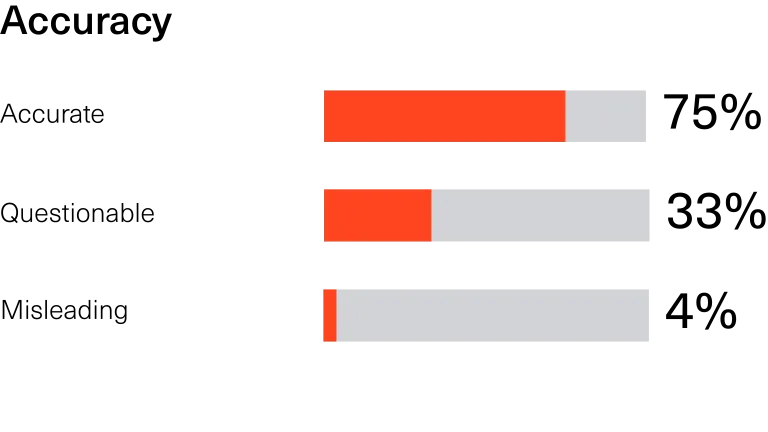
Accurate or broadly sound (54 of 72 videos)
1 in 4
Raised accuracy concerns (18 of 72 videos)
3 of 72
Outright misleading (all CFD / scalping)
58%
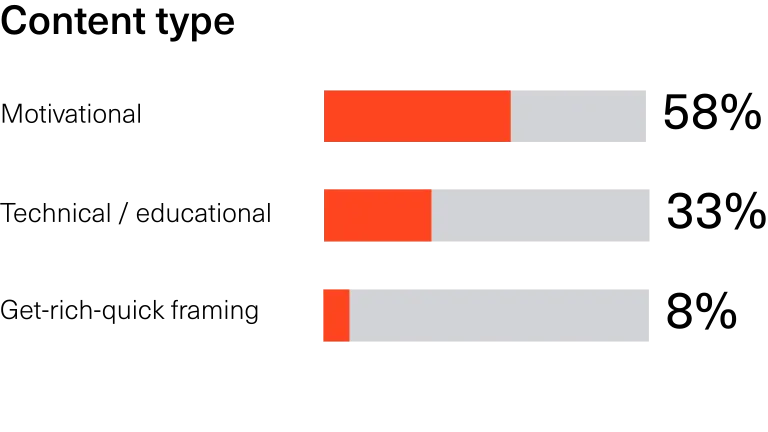
Motivational / lifestyle framing (42 of 72 videos)
8%
Get-rich-quick framing (6 of 72 videos)
1 in 4 videos raised accuracy concerns, and the consequences are real
The 3 outright misleading videos promoted CFD trading through unproven scalping strategies, representing the highest-harm content category not because of the products themselves, but due to the reckless and unqualified way they were presented. When placed alongside what we know about Gen Z's trust in finfluencers and the FCA's own data on CFD losses among inexperienced traders, it’s clear that a small cluster of irresponsible videos can feed a very dangerous pipeline.
“By focusing on the upside exclusively, FinTok hides the silent majority of people who moved too fast and lost money. Professional traders understand probability and risk/reward on every trade, survivorship bias means we only hear from the winners.”
Lukman Otunuga, Head of Market Research, FXTM
How misleading content creates real financial harm
Each step is independently documented. Together, they form a pipeline that regulators, researchers, and platforms have yet to fully close.
“One of the most common patterns we see is retail traders reacting to something they’ve seen online just as a market move finishes. Smart money gets in at the beginning; the ill-informed only catch the downside. FOMO is a powerful driver of poor decisions, and social media is engineered to maximise it.”
Lukman Otunuga, Head of Market Research, FXTM
What finance TikTok looks like
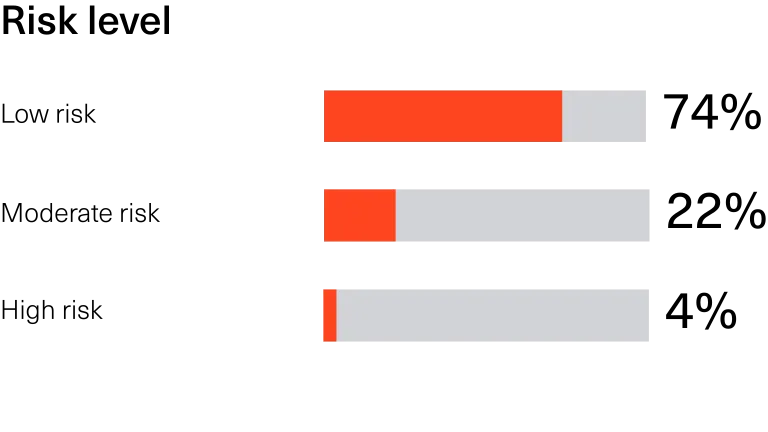
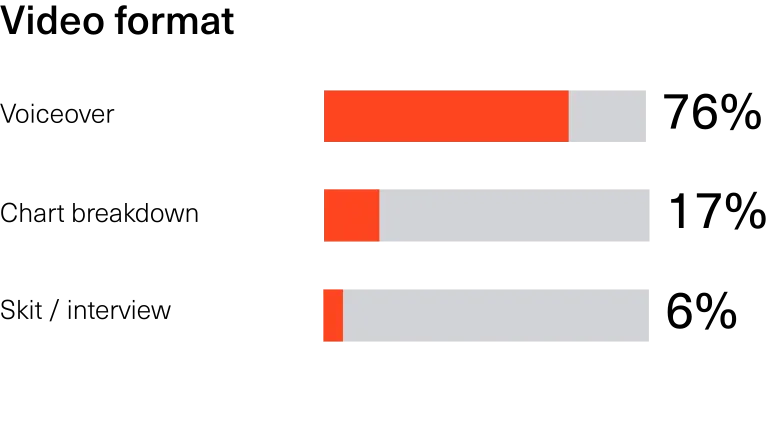
Most content is benign motivational material. Danger concentrates in a specific slice of trading-focused videos that mimic professional analysis (charts, technical jargon, claimed returns) without regulation, disclosure or accountability.
From sound advice to dangerous strategy
Three archetypes from across the 72 videos, showing how similar formats (confident voiceover, chart overlays, bold claims) can carry very different levels of risk.
"How I would invest $1,000 in 2026 - beginner friendly, no hype"
@calltoleap - Technical Low Risk
Accurate, solid beginner guidance
"3 ETFs I am buying during this stock market crash"
@tipsywealth - Technical Moderate
Questionable, no risk disclosure
"The Best 5 Minute Scalping Strategy That Works Daily (Tested)"
@tradingdata2 - CFD / Scalping High Risk
Misleading, dangerous for retail traders
What our market analyst says
Lukman Otunuga, Head of Market Research at FXTM, on what the audit findings mean for retail traders navigating a social media landscape that blurs education and speculation.
"TikTok has democratised financial conversation in genuinely powerful ways, more young people are engaged with markets than at any point in modern history. But democratisation without regulation is a double-edged sword. What our audit shows is that the most dangerous content doesn't look dangerous. It uses the same format, the same confidence, the same chart overlays as legitimate analysis. The difference is that it's promoting leveraged products to inexperienced traders with no disclosure of what the FCA has been saying for years: that 80% of retail CFD accounts lose money. A 60-second video can undo years of careful financial planning. The responsibility cannot sit with the viewer alone."
Case study: When TikTok advice goes wrong
To ground the data in a human story, we're profiling a real case of someone who followed viral trading advice and lost money.
Byron Hyde is a British philosopher of science and public policy at Bangor University and Bristol Medical School in the UK, and Hokkaido University in Japan. He specialises in trust in institutions and holds several public appointments providing scientific and ethical advice to the British Government. He also lost real money following online investment hype, and now studies why it happens to people who should know better.
In the summer of 2021, Hyde invested in Virgin Galactic near its all-time high, following months of social media enthusiasm. The stock has since lost all its value.
"I didn't trust one influencer; I trusted an entire environment. When everything you see for weeks on end says 'invest, invest, invest,' the pressure builds until you cave. That's the power of social proof, and it's remarkably difficult to resist even when you know it exists."
Hyde identifies two forces at work: a financial situation that made him receptive, and an online environment that exploited that vulnerability. "My financial vulnerability made me receptive to narratives that promised escape. That's a pattern you see constantly online. People in difficult circumstances are disproportionately exposed to exactly the kind of content that exploits them."

He only recognised the mistake in hindsight. After the crash, he divested from individual stocks entirely and now invests exclusively in whole-market ETFs. He also carries the lesson into his role as treasurer of several charities, where he is responsible for over £1,000,000 in investments.
On the broader problem, Hyde is direct: "Using social media as your source of financial advice is like going to a casino and letting the house decide when you hit or stick on blackjack. You might win a few rounds, but you'll go home empty handed."
His research helps explain why even informed people fall for it. We rely on trust shortcuts to navigate daily life; we can't verify every claim ourselves. "Society runs on trust, and trust requires shortcuts. We can't verify everything ourselves. But those same shortcuts also leave us vulnerable to anyone who knows how to look the part."
The lesson Hyde draws is simple: if you don't understand what you're investing in, the hype is the only thing carrying you, and it won't hold.
The scale of the finfluencer problem
68% of finfluencer posts reviewed failed FCA financial promotion disclosure standards
$5.7B in consumer losses to investment fraud, social media was the top contact method in 2023
71% of financial advice on social media is misleading
Over half of investors do not always verify financial advice received from social media
7 influencers charged by the FCA for promoting an unauthorised foreign exchange trading scheme
FXTM's audit sits within a growing body of evidence from regulators, enforcement bodies and research institutes about the real-world harm caused by unregulated social media finance advice.
In June 2025, nine financial regulators across six countries led by the UK's FCA launched a coordinated crackdown on illegal finfluencers, resulting in arrests, 650+ social media takedown requests and criminal charges. A second wave of action followed in April 2026, involving 17 regulators worldwide. FCA enforcement actions against finfluencers rose 174% in 2025 alone, and 7,300% between 2023 and 2025.
“The people most at risk are under-35s with limited financial literacy and high screen time, and especially anyone experiencing financial anxiety who is desperately looking for a fast solution. In trading, ‘always’ is a dirty word, and ‘get rich quick’ is almost always a red flag.”
Lukman Otunuga, Head of Market Research, FXTM
Methodology
FXTM audited 72 TikTok videos published under #FinanceTok, #TradingTips, #ForexTips, #CFDTrading and #SideHustle between March–May 2026. Each video was independently reviewed and rated by risk level and factual accuracy.
For informational and educational purposes only. Does not constitute financial advice.