


The Gender Gap in Crypto Ownership
* Trading is risky. Your capital is at risk.

Key takeaways
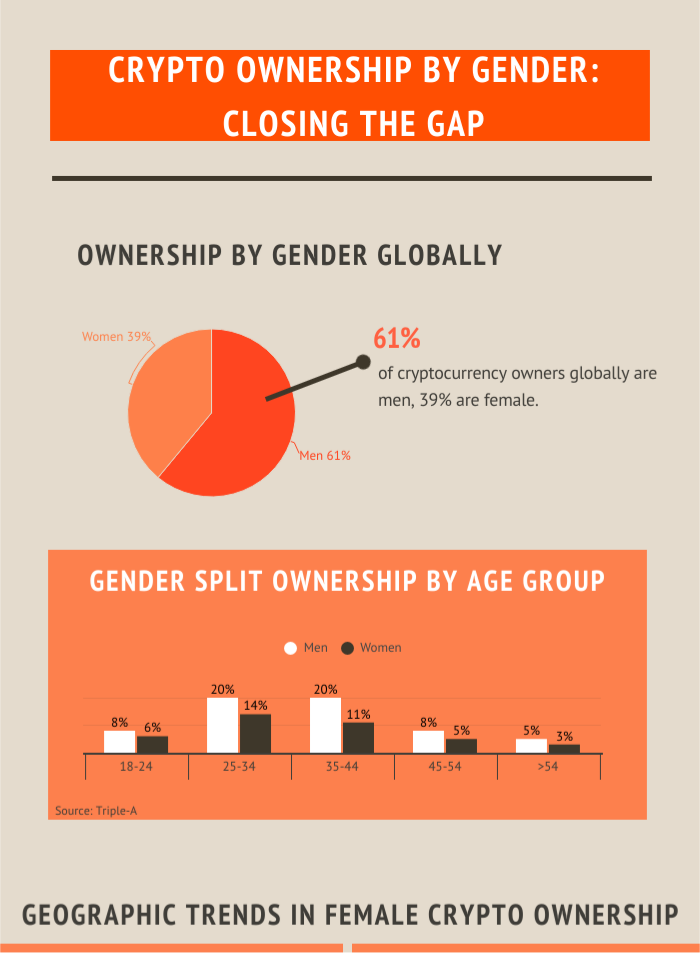
Today, women count for 39% of global crypto ownership
Crypto ownership among women is rising fastest in Asia and Africa
Crypto ownership is rising fastest among Gen Z and Millenials
The Crypto gender gap
When Bitcoin first appeared in 2009, few could have imagined how quickly cryptocurrency would grow from an obscure experiment into a global financial force. Yet, more than fifteen years on, one striking pattern remains: men continue to dominate crypto ownership.
Across much of the world, women are still underrepresented in this fast-moving sector, with studies suggesting they account for 39% of owners while men account for 61%. Although the gap is gradually narrowing in some regions, it remains significant.
“The gender gap in crypto ownership isn’t just about numbers; it’s about access, confidence, and inclusion. While men still dominate, the fact that nearly four in ten crypto owners are now women shows real progress,” says Reiko Kwok, Chief Marketing Officer at FXTM.
Some countries, particularly in North America and Europe, show the widest gaps, with men making up most holders. By contrast, adoption among women is rising more quickly in parts of Asia and Africa, particularly in emerging markets where crypto is seen as an accessible alternative to traditional finance.
Several factors help explain this divide: men’s higher risk tolerance, greater exposure to technical knowledge, lower financial confidence among women, the male-dominated culture of the crypto community, and the lasting effects of historical financial exclusion.
This page explores where women are leading the way in crypto ownership, where progress is lagging, and what this means for the future of digital finance.
Demographical and geographical differences
Younger women are driving adoption
Women aged 25–34 (14%) and 35–44 (11%) represent the largest share of female ownership. This suggests that younger generations, particularly Millennials and Gen Z, are leading the way in bridging the gender divide in crypto.
“Younger women are leading the way in closing the gap. Millennials and Gen Z are proving that as financial literacy improves and barriers fall, women are just as willing to participate in the future of finance as men,” explains Reiko Kwok.
Year-on-year female growth
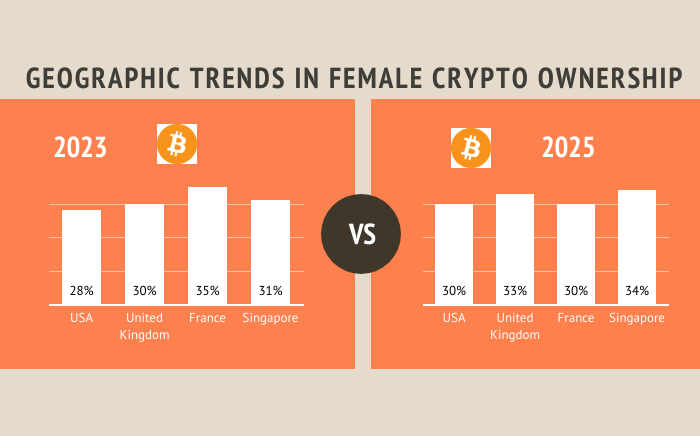
According to Gemini’s ‘Global State of Crypto’ -report female ownership has grown in several key regions between 2023 and 2025:
- USA: 28% → 30%
- UK: 30% → 33%
- Singapore: 31% → 34%
- France: 35% → 30% (a decline, highlighting regional differences)
Regional trends:
- The UK and Singapore show the strongest growth in female participation.
- The USA is experiencing steady but slower growth.
- France, once ahead, has slipped back, showing that progress is not uniform across countries.
Female crypto ownership in India
Rising participation: A 20% year-on-year surge
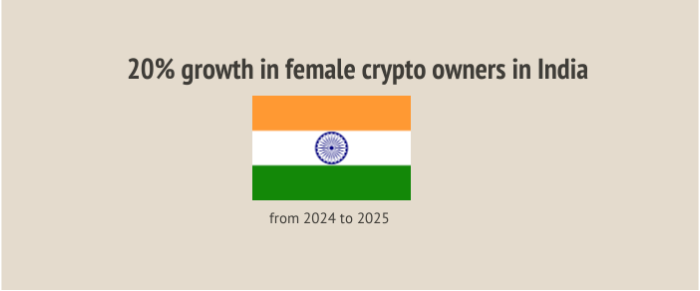
Between January 2024 and 2025, female participation in India’s crypto market surged by 20%, underscoring growing confidence and financial inclusion among women.
Women now account for 15% of total trading volume, often favouring long-term investment in stable assets like Bitcoin and Ethereum, rather than speculative tokens.
“India is one of the most exciting markets for female crypto adoption. Women there are not only entering in greater numbers but also investing strategically, with a focus on stability and long-term growth. That’s a sign of maturity in the market,” says Reiko Kwok.
Cities making a difference
Regional data reveals striking variations:
- Hyderabad leads the nation, with 45% of crypto investors being women and 84% of portfolios showing positive returns.
- Other cities with notable female representation include Surat (33%), Botad (25%), Pune (24%), Jaipur (23%), and Kolkata (22%).
Why India is ahead in female crypto adoption
India’s female crypto investor base is growing rapidly, driven by increased financial literacy, digital access, and shifting attitudes toward digital assets. This rising tide represents not just improved gender representation, but also a shift toward thoughtful, long-term investing—a trend that could reshape the country’s crypto landscape in the years ahead.
Female crypto ownership in Africa
Africa shows some of the most striking contrasts in female participation.
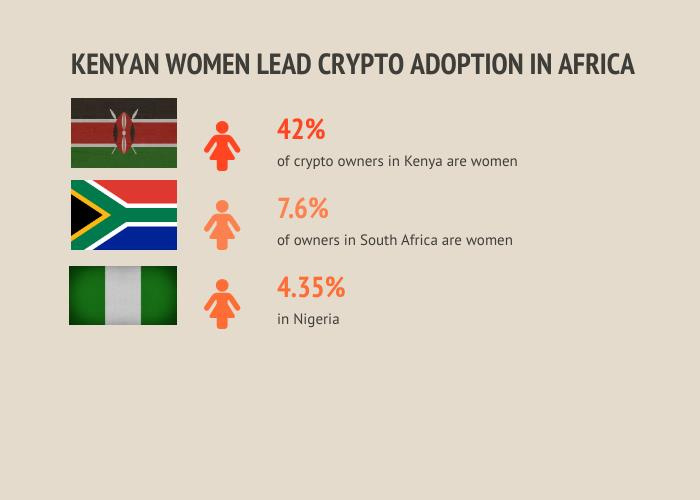
In Kenya, women now account for an impressive 42% of all crypto owners, the highest share on the continent and a sign of growing financial inclusion.
By comparison, women represent 7.6% of crypto owners in South Africa and just 4.35% in Nigeria. These figures highlight both the potential and the disparities across African markets, where adoption is shaped by local economic conditions and access to digital finance.
Female crypto ownership in the Nordics
In contrast to India’s rapid rise, women in the Nordic countries remain underrepresented in crypto.
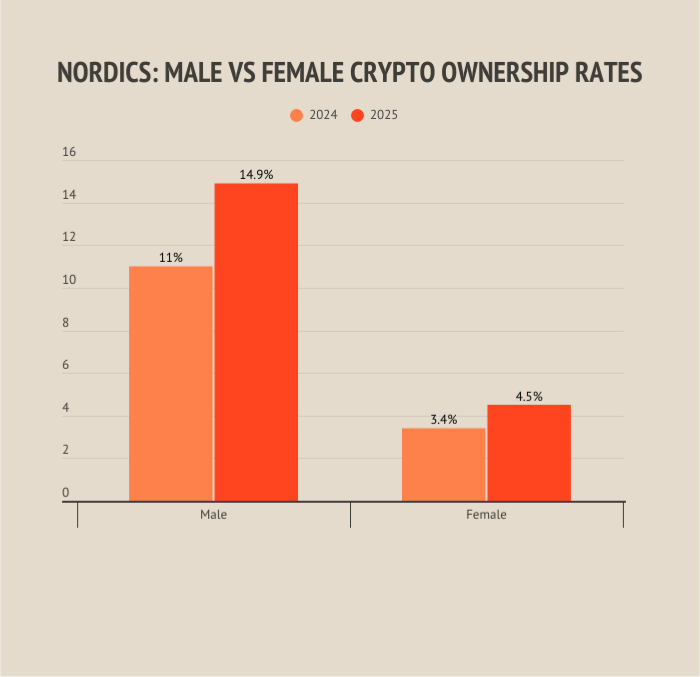
The 2025 Nordic Crypto Adoption Survey shows that only 4.5% of adult women own cryptocurrencies, compared with 15% of men, leaving women making up just 23% of all crypto owners in the region.
While this is a slight improvement from 3.4% last year, progress is modest compared to global trends. Despite strong digital infrastructure and high financial literacy across Norway, Sweden, Denmark, Finland, and Iceland, the gender gap in crypto ownership remains one of the widest in Europe.
Why the gap exists
Several factors help explain why women are less likely to invest in cryptocurrencies:
- Long-term strategies vs. trading: While not shown directly in the infographic above, other data suggests women are more likely to take a long-term investment approach, compared to men who are more active traders. This could explain why adoption is steadily increasing among women in emerging and developed markets alike.
- Risk appetite and confidence: Studies suggest that men are typically more willing to take on high-risk investments, whereas women are often more cautious with financial decisions. This difference in risk tolerance has a significant impact on who enters the volatile crypto space.
- Access to knowledge and networks: Men are more likely to encounter cryptocurrency through professional or social circles, while women report having less exposure to technical knowledge and industry communities.
- Cultural barriers: The crypto space has historically been male dominated, making it harder for women to see role models or feel included in discussions.
- Financial exclusion: Structural inequalities in traditional finance, such as access to resources and investment opportunities, also carry over into digital assets, reinforcing the divide.
“Cultural barriers, a lack of visible role models, and lower exposure to technical knowledge have held women back in crypto. But as education and access improve, those walls are beginning to come down,” explains Reiko Kwok.
Where women are leading the way
Despite the overall imbalance, some regions are showing much stronger female participation. Asia and Africa are at the forefront, where women account for a higher share of crypto owners and traders compared to global averages. These regions often benefit from mobile-first banking and decentralised finance solutions that make crypto more accessible.
In contrast, North America and Europe remain the regions with the widest gender gaps. Although adoption is growing, women are still underrepresented compared to men, particularly in markets like the US and UK.
The bottom line
The outlook is becoming more positive. Younger generations are helping to close the gender gap as Gen Z women show rising interest in crypto ownership. Financial literacy campaigns, university clubs, and outreach programmes targeted at women are giving them more confidence to invest and engage with digital assets.
Furthermore, companies and organisations are beginning to recognise the value of diversity in crypto adoption. Initiatives that provide inclusive education, accessible learning tools, and community support are expected to play a vital role in narrowing the gap in the years ahead.
“The future of crypto will be more inclusive. By giving women the right tools, communities, and confidence, we’re not just levelling the playing field—we’re strengthening the entire ecosystem,” concludes Reiko Kwok.